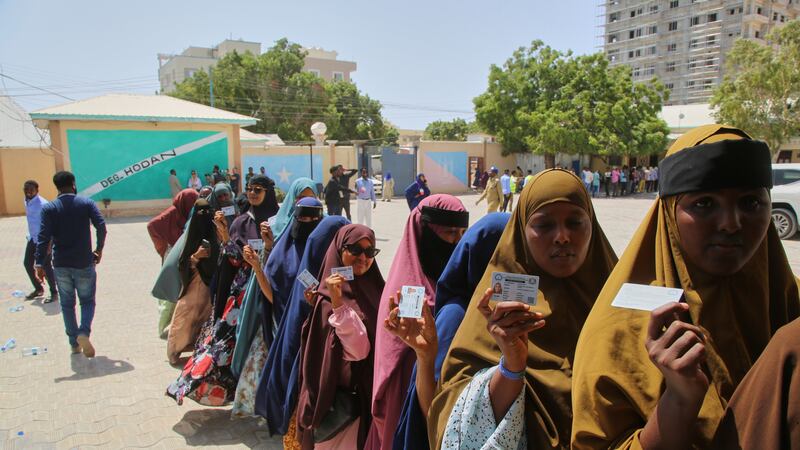
When Mogadishu’s citizens cast ballots on 25 November 2025, they made history. For the first time in more than five decades, Somalis voted directly for their local council representatives — a genuine turning point in the country’s long democratic transition. On 8 March 2026, the Supreme Court of the Federal Republic of Somalia confirmed what the record showed: the elections were clean. No legal challenge was filed. The results were constitutionally valid.
Independence House’s new assessment report accepts that achievement — and then asks the harder question: why did three quarters of registered voters stay home?
Drawing on a survey of 328 citizens, qualitative inputs from six political parties, and a submission from the National Independent Electoral Commission, the report identifies a systemic participation deficit rooted in three mutually reinforcing failures. Approximately 90 percent of respondents encountered problems with electoral information — unclear communications, misinformation, or inadequate voter education. Seventy-two percent had weak or only moderate trust in the institutions running the elections. And political disengagement, compounded by an opposition boycott, stripped the contest of the competitive energy that motivates participation.
The report also surfaces an urgent governance concern. The majority of participating political parties did not hold internal elections to select their candidates. Lists were compiled by party chairs in consultation with inner circles — without member participation and without accountability. Independence House argues this is not a procedural detail: it is a democratic failure at the foundation of the electoral chain.
“Conducting an election is not the same as building an electoral democracy,” the report states. Somalia’s transition will be measured not by the procedural quality of individual elections, but by whether successive cycles deepen participation, widen representation, and generate governance outcomes citizens recognise as their own.
Independence House calls for six urgent measures: a permanent civic education programme; an integrated electoral communication strategy; visible trust-building mechanisms; inclusive political dialogue; a stronger and more independent Electoral Commission; and mandatory minimum standards for the internal democratic governance of political parties. The next electoral cycle cannot wait.
Read the full report. Assessing Electoral Transparency, Party Governance, and Public Participation

